Project Overview
Vibra is a TikTok-style social app on the Farcaster protocol — vertical video in a Web3 space where feeds were still walls of text. As the sole designer working alongside a single frontend engineer, I led product, UI/UX, and brand end to end, and shipped a functional cross-platform MVP in one month, building the entire React Native design system from scratch.
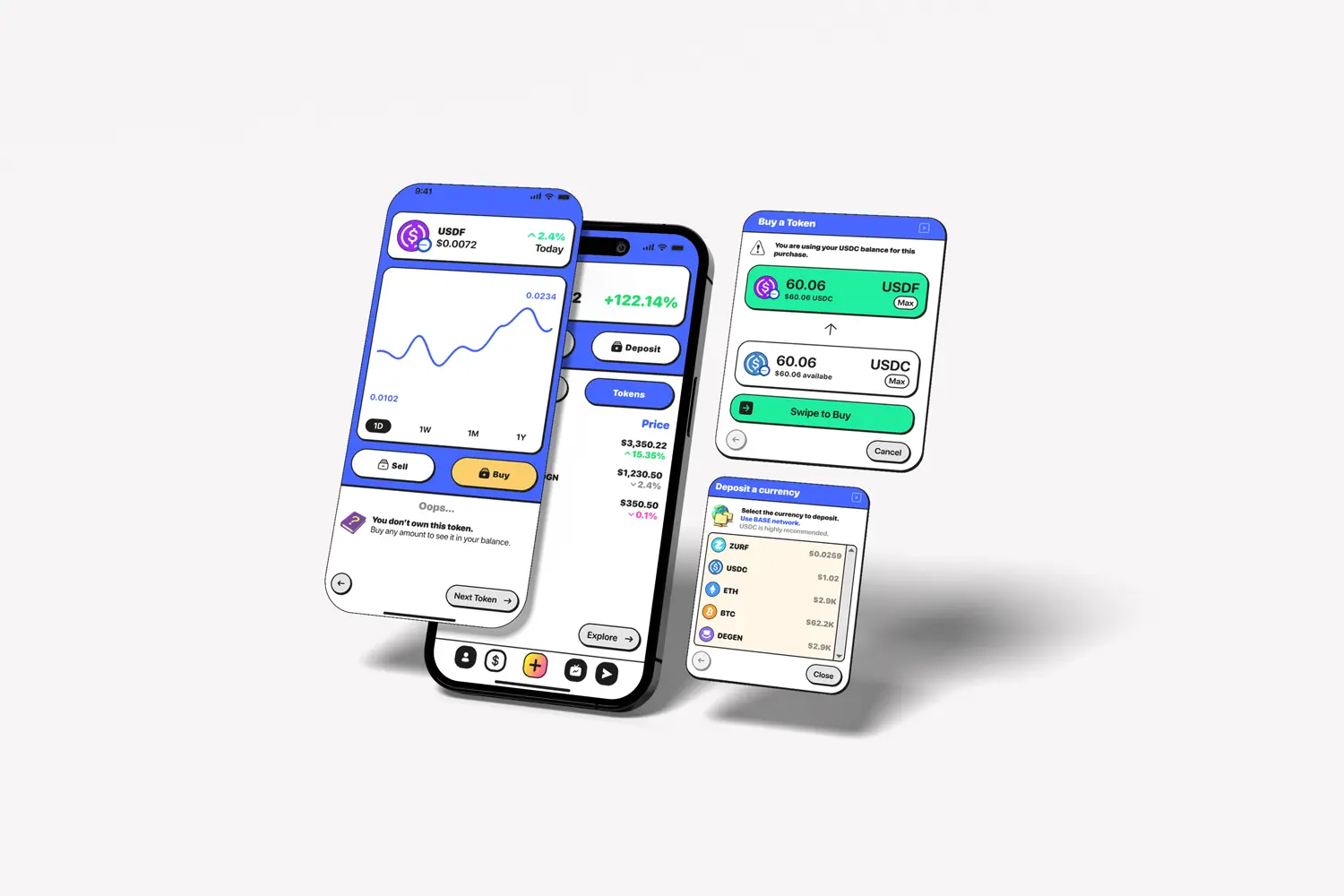
Targeting Farcaster builders, founders, and creators, Vibra merges early-2000s cultural nostalgia with Social-Fi mechanics — native crypto wallets and tradable Fan Tokens — to prove that blockchain interactions can feel visual, intuitive, and dynamic rather than technical and text-heavy.
The Challenge
- Aggressive go-to-market: a fully functional MVP, ready for user testing, inside a strict one-month window.
- Complex feature integration: folding heavy Web3 mechanics — native wallets, tradable Fan Tokens — into a fast vertical-video experience without breaking the content loop.
- Cross-platform constraints: one cohesive experience across the distinct technical limits of iOS and Android simultaneously, on React Native.
How I Solved It
1. Compartmentalized Navigation — DeFi and social as separate "worlds"
To prevent the cognitive overload of blending DeFi mechanics with social scrolling, I designed a segmented navigation model. Each primary feature — the video feed, the wallet, the token-trading ecosystem — operates as its own distinct "world." This isolates complex financial interactions from the primary content loop, so the viewing experience stays entirely frictionless.
2. "Controlled Brutalism" — nostalgia without breaking usability
The brand identity draws on early-2000s music television and old-school operating systems, aimed at a millennial, tech-forward demographic. To keep the aesthetic from compromising usability, the core UI rests on minimal, standardized patterns for clear wayfinding — and the bold, brutalist elements are "exploded" only at specific interaction peaks, delivering emotional impact without sacrificing everyday function.
Engineering Handoff
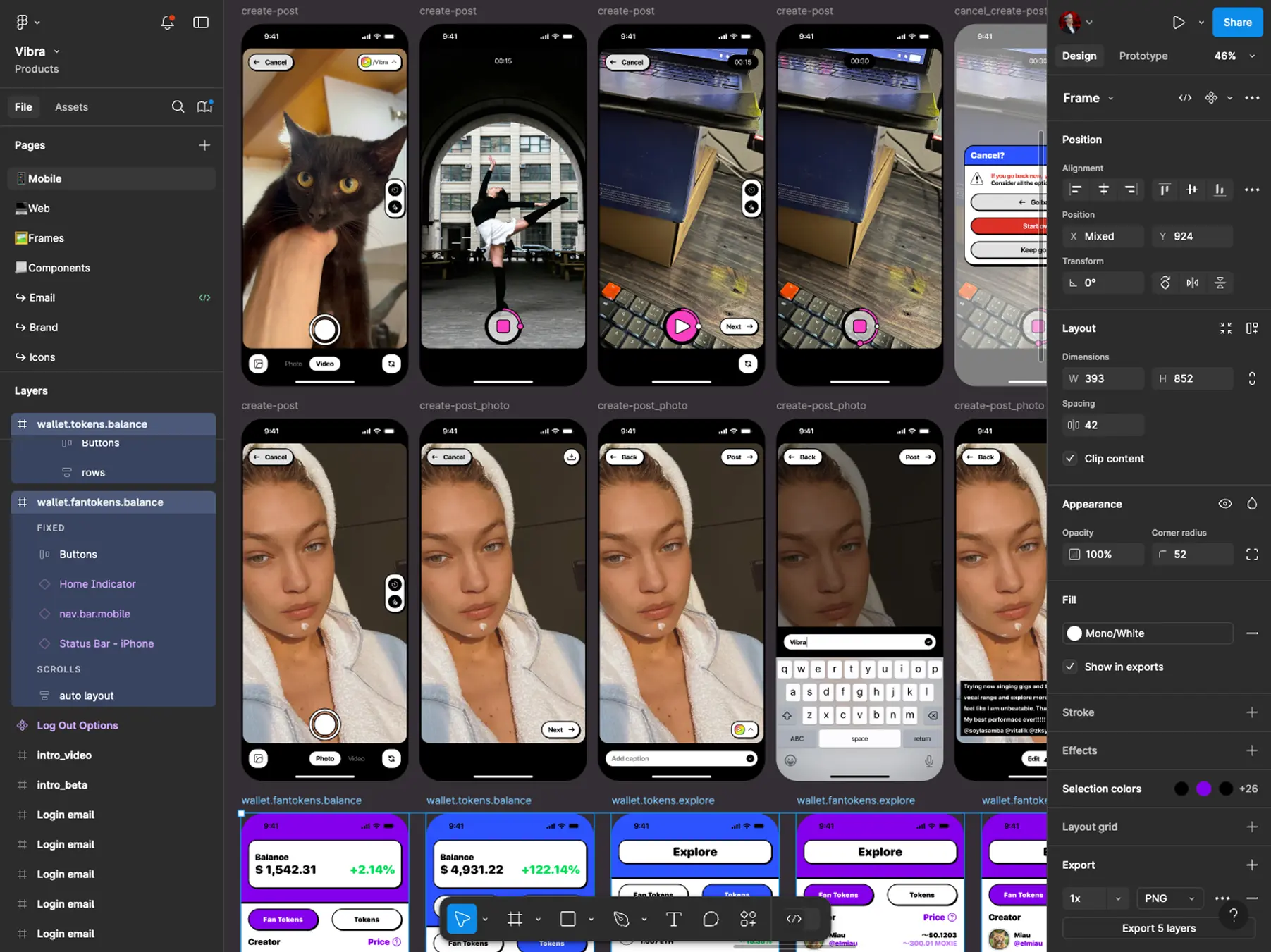
As the sole designer working alongside one frontend developer, I built a comprehensive Figma design system optimized for rapid React Native implementation. Because we shipped iOS and Android simultaneously, I unified component behavior into a generalized, cross-platform design language — minimizing development friction while preserving the core aesthetic. We used Expo for real-time testing in production, which let us iterate on UX immediately based on technical feedback.
Outcome & Proof
Vibra shipped a functional MVP inside the one-month window and moved straight into user testing and iteration — a complete cross-platform product (iOS + Android) designed solo. It launched live on Farcaster, where it runs a public community channel for builders and creators.
The more telling result is that the design system compounded. Vibra's React Native foundation grew directly out of the one I built for Zurf, its Lens-Protocol precursor — two shipped Social-Fi products on one evolving design system, built to be reused rather than rebuilt.
Platform usage metrics are held privately by the startup; what stands on the record here is the shipped product, the live community channel, and the design-system lineage across two ventures.
What this demonstrates: shipping a complete, cross-platform product design system solo, under a hard deadline, in direct collaboration with engineering.
Links & Documentation
- 🔗 Farcaster Community Channel
- 🔗 View Figma Project File
Password:SALEM